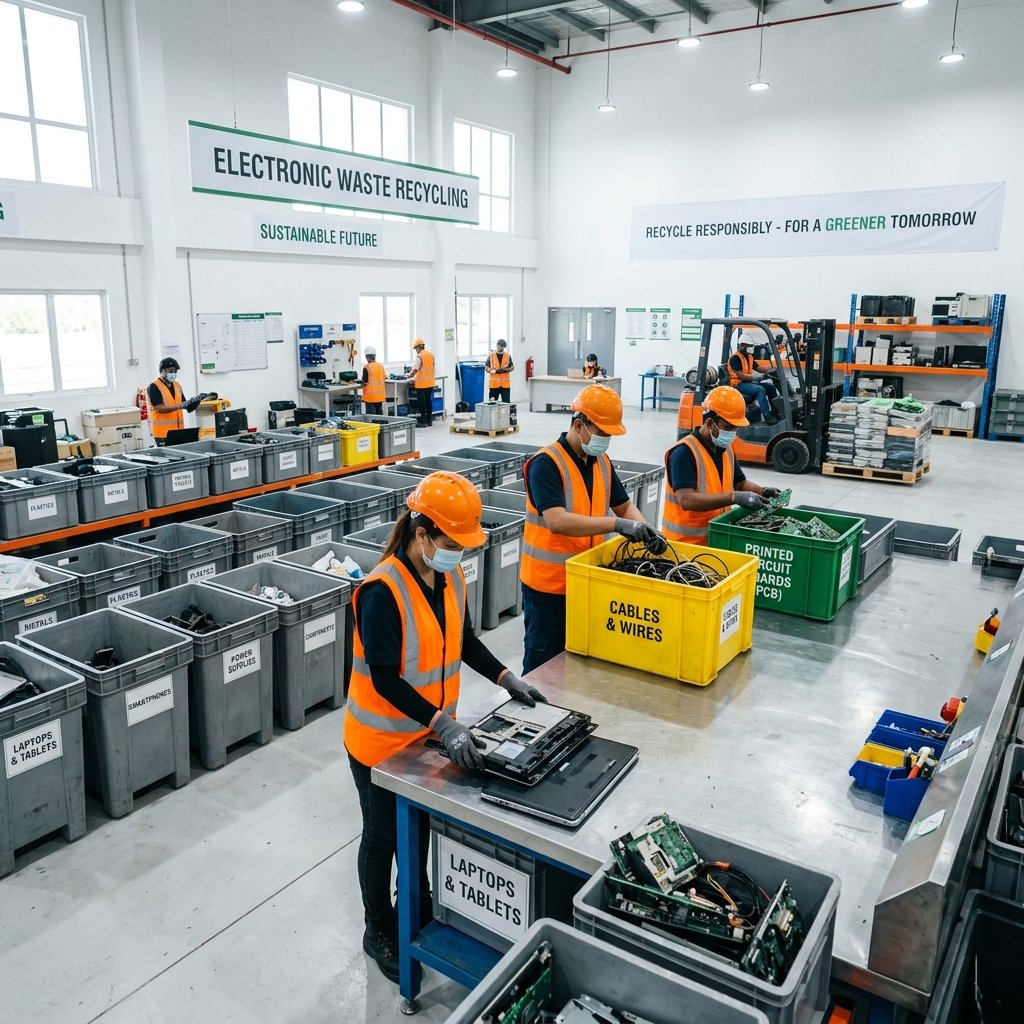
Electronic waste is the world's fastest-growing waste stream — and India is its third-largest contributor. Understand it. Reduce it. Dispose of it right.
Start LearningElectronic waste — commonly called e-waste or WEEE (Waste Electrical and Electronic Equipment) — refers to any discarded device that runs on electricity or contains electrical components.
As technology advances and product lifespans shorten, billions of devices reach end-of-life each year. In India, the rapid growth of consumer electronics, expanding mobile penetration, and digital infrastructure upgrades have made e-waste one of the most pressing environmental challenges of our time.
India generates over 3 million metric tonnes of e-waste annually — ranking third globally, behind only China and the USA.
Only ~20% of global e-waste is formally collected and recycled.
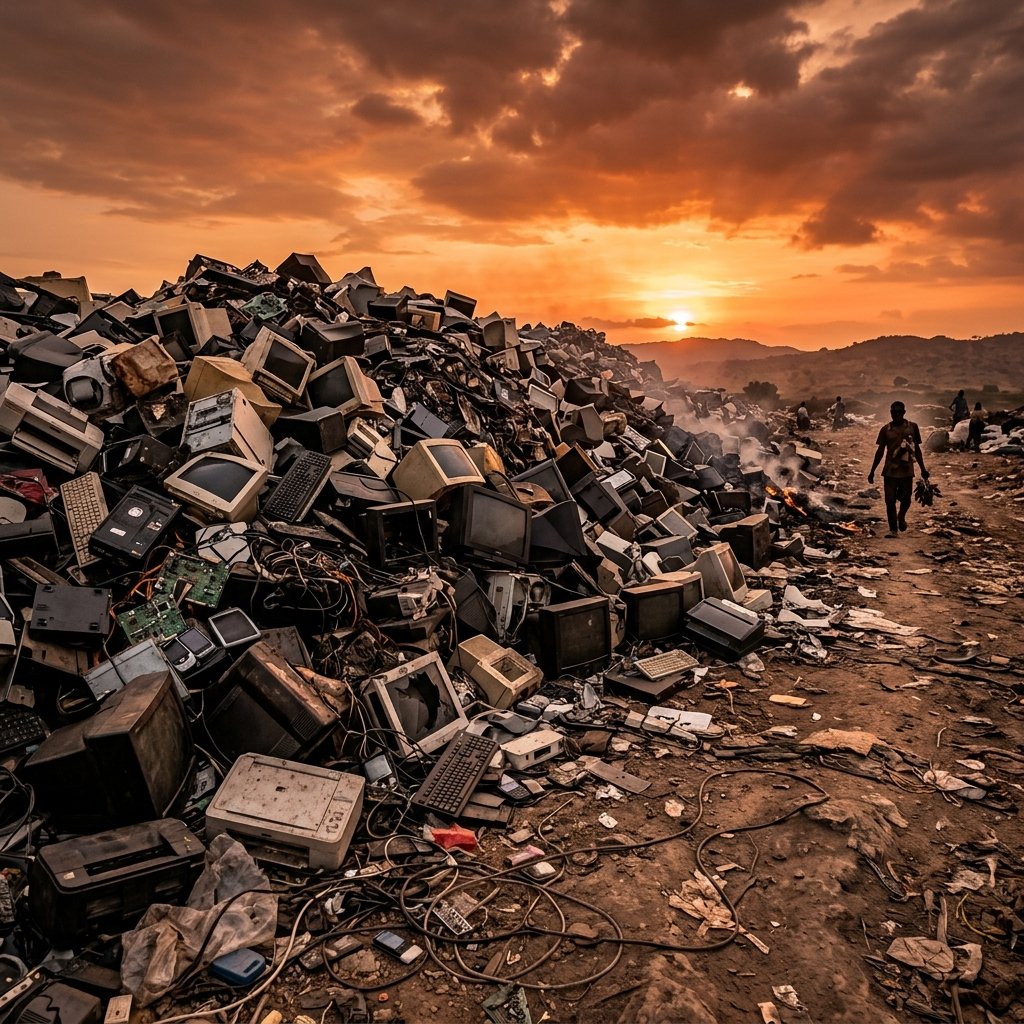
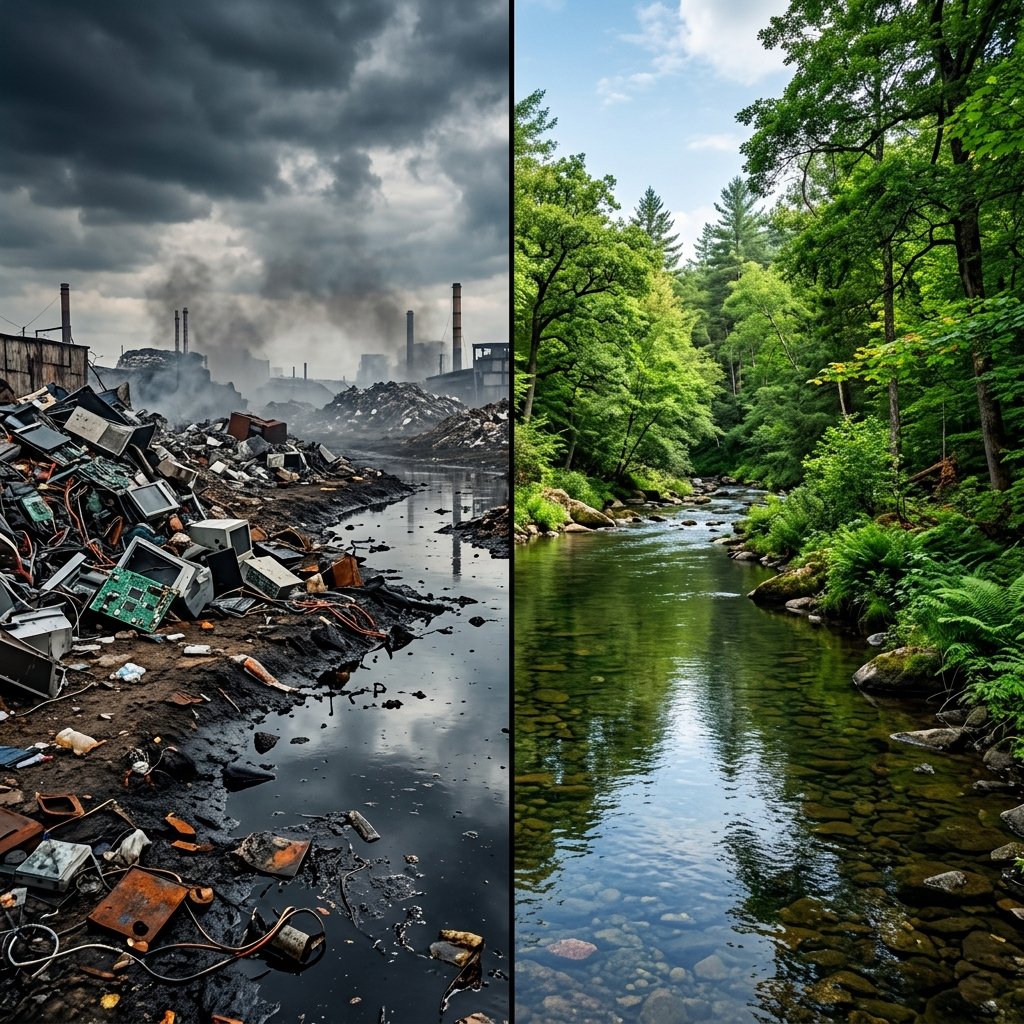
When e-waste is improperly disposed of — burned, buried, or sent to informal recyclers — it releases a cocktail of dangerous substances into our environment.
Lead, cadmium, and mercury from circuit boards and batteries leach into soil, rendering agricultural land infertile and contaminating food chains for decades.
Toxic leachates from landfilled e-waste seep into groundwater and rivers, affecting drinking water sources for millions of people living downstream.
Open burning of e-waste to extract metals releases dioxins, furans, and heavy metal particulates — causing serious respiratory illness in surrounding communities.
Chronic exposure to e-waste toxins is linked to neurological damage, kidney disease, hormonal disruption, developmental disorders in children, and increased cancer risk.
E-waste contains gold, silver, copper, palladium, and rare-earth metals worth an estimated USD 57 billion globally every year — most of which is wasted in landfills.
Manufacturing replacements for prematurely discarded electronics demands vast energy and raw material extraction — contributing significantly to carbon emissions.
India's E-Waste Management Rules 2022 define 21 categories of electrical and electronic equipment. Here are the most common:
Laptops, desktops, servers, tablets, keyboards, monitors, printers, storage devices
Smartphones, feature phones, cordless phones, routers, modems, telecom towers
Televisions, audio equipment, cameras, gaming consoles, DVD/Blu-ray players
Refrigerators, washing machines, air conditioners, dishwashers, electric stoves
Lead-acid batteries, lithium-ion cells, UPS systems, power banks, solar components
PLCs, SCADA systems, industrial sensors, control panels, variable frequency drives
Don't throw it in the bin. Don't sell it to the kabadiwala. Follow these steps to ensure your e-waste is handled legally and safely.
Check if the item is covered under India's E-Waste Rules — any device powered by electricity or a battery qualifies. Collect items from your home, office, or facility.
Before handing over any computer, phone, or storage device, perform a factory reset or certified data wipe. This protects your personal and business information.
Use only CPCB-authorized recyclers. Avoid informal kabadiwala routes, as they often dismantle electronics unsafely. Our partner Elwareco is fully authorized.
Always request a Certificate of Recycling. This serves as legal proof of compliant disposal and is essential for corporate CSR reporting and regulatory audits.
Ready to dispose of your e-waste the right way?
Connect with Elwareco
Electronic waste (e-waste) refers to discarded electrical or electronic devices. It includes everything from smartphones, laptops, and televisions to refrigerators, air conditioners, and industrial equipment at the end of their useful life.
E-waste contains toxic substances including lead, mercury, cadmium, arsenic, and brominated flame retardants. When improperly disposed of in landfills or informally recycled, these toxins leach into soil and groundwater, posing severe risks to human health and ecosystems.
India is the third largest generator of e-waste in the world, producing over 3 million metric tonnes per year. Only a fraction of this is processed through formal, certified recycling channels — most ends up in landfills or is handled by informal recyclers.
While convenient, informal recyclers (kabadiwalas) typically process e-waste unsafely — using open burning or acid baths without protective equipment. This harms their health and the environment. It also leaves you without legal documentation of disposal. Always use CPCB-authorized recyclers.
Contact a CPCB-authorized e-waste recycler. Our partner Elwareco (elwareco.com) provides scheduled pickup, certified processing, data destruction, and official Certificates of Recycling for both individuals and corporate clients across India.